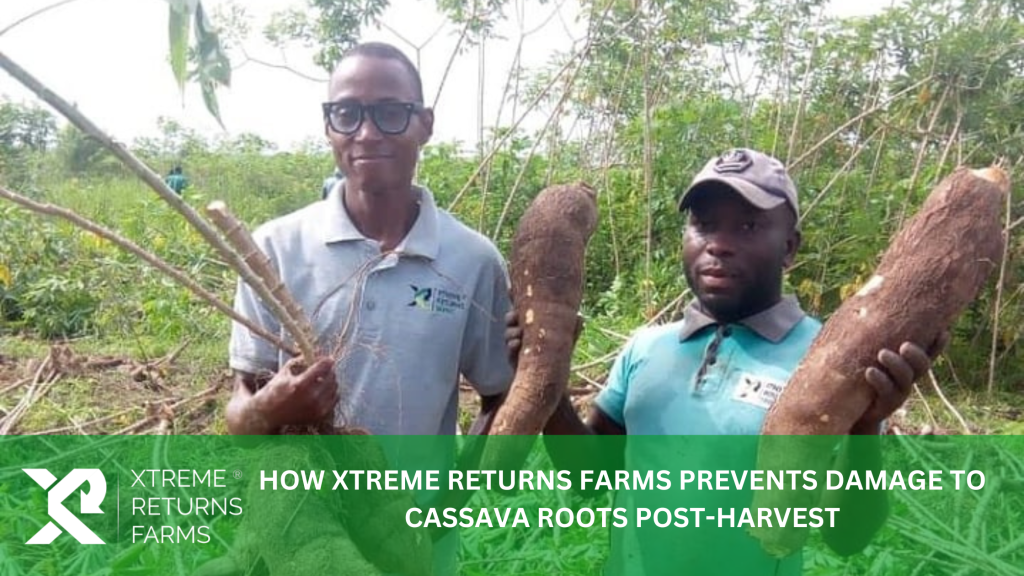
Cassava is a vital crop to West Africa’s economy, feeding millions and driving agricultural exports across borders. However, cassava roots are highly perishable; they can begin to spoil within 48 hours of harvest if not handled properly. At Xtreme Returns Farm, we understand that what happens after harvest is just as important as what happens in the field. That’s why we’ve developed sustainable harvesting and post-harvest handling techniques that extend shelf life, preserve quality, and reduce losses while maintaining eco-friendly standards.
Cassava roots are rich in starch and moisture this makes them highly prone to Post-Harvest Physiological Deterioration (PPD). This turns fresh roots brown, fibrous, and inedible within days. Factors like rough handling, delayed processing, and improper storage leads to loss and harvest spoilage.
Here is how we are Preserving Cassava Quality from Post-Harvest:
- Timely Processing: we immediately move cassava roots to shaded, ventilated areas to protect them from direct sunlight. We move speedily to ensure minimal delay between harvesting and processing to maintain starch quality and reduce physiological deterioration.
- Cleaning and Sorting: The roots are carefully cleaned to remove dirt without using excessive water, as too much moisture encourages microbial growth. Damaged or diseased roots are separated to prevent contamination.
- Speedy Transportation to Processing Units: Our mechanized logistics system ensures that harvested cassava reaches our processing centers within hours. This quick turnaround is a key reason why Xtreme Returns Farm produces premium-quality cassava flour and starch that meet global export standards.
- Pre-Processing Treatments: For extended preservation, cassava roots may be peeled, chipped, or grated before drying. This reduces the risk of spoilage and prepares the roots for efficient processing into flour, starch, or animal feed.
- Sustainable Storage Techniques: Xtreme Returns Farm employs eco-friendly storage technologies that protect both product quality and the environment. Some of our storage techniques include:
- In-Ground Storage: Some cassava varieties are left in the soil for short-term storage under controlled moisture conditions. This method allows flexibility in harvesting schedules while maintaining freshness.
- Wet Storage Technique: Freshly harvested roots are submerged in clean water for several days, slowing down deterioration naturally without chemicals.
- Modified Atmospheric Storage: By using breathable containers and temperature regulation, we create ideal conditions for longer shelf life and reduced microbial activity.
- Processing Waste Reuse: Peels and residues are converted into compost and organic fertilizers, closing the sustainability loop and enriching the next planting cycle.
CONCLUSION
At Xtreme Returns Farm, sustainability is not just a practice it is our lifestyle. By combining modern science with eco-conscious farming, we’ve built a cassava processing system that minimizes waste, reduces spoilage, and delivers export-quality roots and products to global markets. Our methods ensure every cassava root harvested is handled responsibly, preserved efficiently, and transformed sustainably. We’ve made it our mission to combat this issue by revolutionizing how cassava roots are harvested, handled, and stored to meet both local and international market standards.
Contact us today for fresh and organic maize, cassava and plantains produce for retail and wholesale us. Call 09030001295 to order now.