
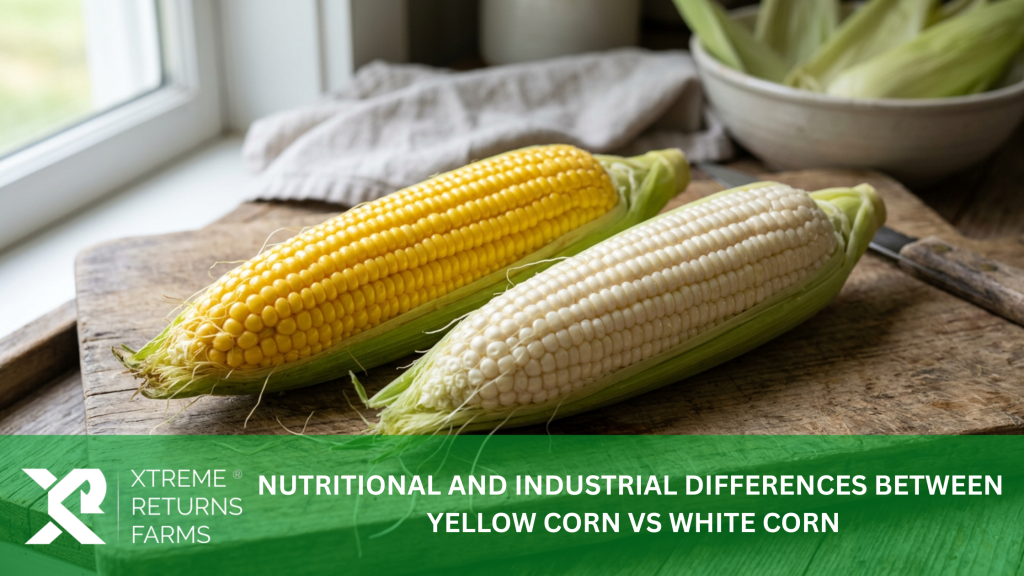
Corn remains one of the most important agricultural commodities in the world, serving as a staple food, livestock feed ingredient, and industrial raw material. Across Africa and many parts of the world, two major varieties dominate commercial production and consumption: yellow corn and white corn. Although both belong to the same species, they differ significantly in appearance, nutritional composition, industrial applications, market demand, and economic value.
Understanding the differences between yellow corn and white corn is important for farmers, food processors, exporters, livestock producers, and consumers who want to make informed choices based on nutrition, profitability, and industrial usage.
Although Both Types Contain Carbohydrates, Fiber, Vitamins, and Minerals These Are Some Important Differences Between Yellow Corn And White Corn:
- Beta-Carotene Content: One of the biggest nutritional advantages of yellow corn is its high beta-carotene content. Beta-carotene converts into Vitamin A in the body, helping to support healthy vision, strengthen immunity, promote healthy skin and reduce oxidative stress. White corn contains little or no beta-carotene, making yellow corn nutritionally superior in terms of Vitamin A content.
- Antioxidant Properties: Yellow corn contains carotenoids and lutein, which are antioxidants that help protect cells from damage caused by free radicals. These nutrients may help lower the risk of certain chronic diseases and support eye health. White corn contains fewer antioxidant pigments compared to yellow corn.
- Taste and Texture: Many consumers describe white corn as soft, mild in flavor and more suitable for traditional dishes; however yellow corn often has a slightly sweeter taste, firmer texture and a richer flavor profile.
- Production: Yellow corn is the preferred choice for poultry and livestock feed because it enhances egg yolk colour, poultry skin pigmentation and livestock energy intake. Its high energy value makes it an essential ingredient in feed mills worldwide. White corn is highly preferred for producing corn flour, baking goods, semolina, cornmeal, local pap, etc. The lighter colour of white corn makes it more appealing for traditional food preparation.
- Food Processing: Many food manufacturers prefer white corn because it produces cleaner-looking products, neutral taste and smooth texture. This makes it suitable for both local and export food markets. However many cereal brands and snack manufacturers prefer yellow corn for products such as corn flakes, tortilla chips, popcorn and corn snacks. Its bright color and flavor appeal to consumers and improve product appearance.
CONCLUSION
For Industrial giants and consumers, understanding the nutritional and industrial differences between yellow and white corn can help maximize profitability, meet market demand, and improve production strategies.
At Xtreme Returns Farm, producing high-quality corn through sustainable and modern farming practices remains essential for supporting food industries, livestock production, and agricultural development across local and international markets. We grow, process, and supply top-grade yellow and white corn designed to meet your nutritional needs and international health standards. Our maize is tested for purity, moisture content, toxin levels, and nutrient density, ensuring that feed mills receive only top-grade product. We are committed to providing sustainable support to agribusinesses and contributes to Nigeria’s agricultural economy.
Call 09030001295 to order now.