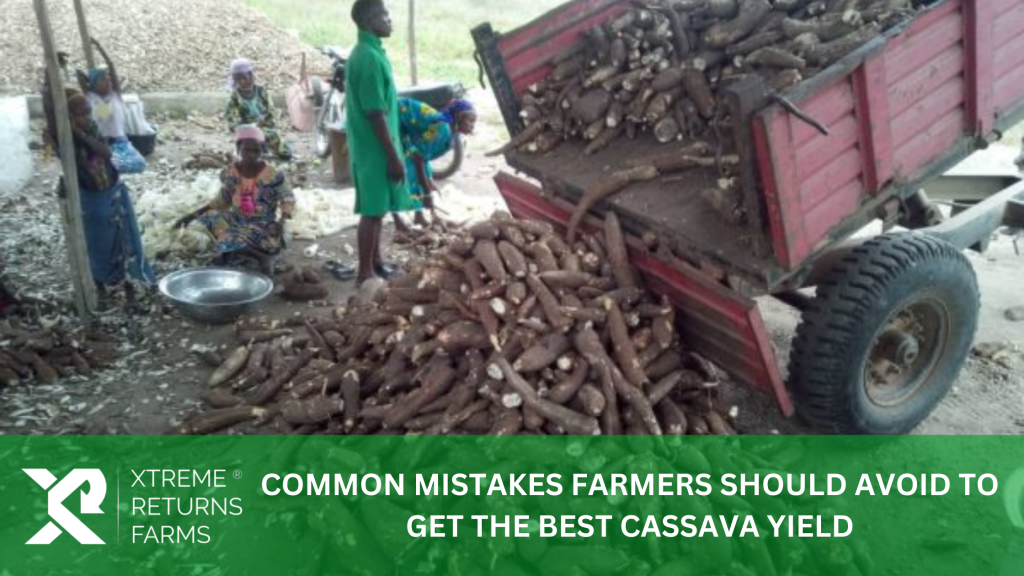
Proper planting care among other things, ensures your cassava perform optimally. However, achieving a great cassava yield requires more than just planting stems in the soil; it involves following specific best practices that maximize productivity and improve tuber quality. Poor farming practices often lead to low yields and financial losses. Understanding the common mistakes cassava farmers make is the first step toward avoiding low yield.
Here are some common mistakes to avoid:
- Using Poor Quality Stem Cuttings: Many farmers use old, diseased, or damaged stems for planting. This leads to low sprouting rates and weak plants. Using certified, disease-free cuttings ensures strong root development and better yields.
- Poor Spacing: Planting cassava too close leads to competition for nutrients and sunlight. On the other hand, planting too far apart reduces the number of plants per hectare. Both mistakes significantly reduce yield.
- Infertile Soil: Cassava removes large amounts of nutrients from the soil. Many farmers assume it grows well without fertilizers, which results in nutrient depletion and small tubers. Organic manure or NPK fertilizers must be applied to fortify the soil and ensure the cassava stem get the nutrients it need to thrive.
- Delayed or Inadequate Weeding: Weeds compete aggressively with cassava during its early growth stages. Failure to weed on time can slash yields by more than half. Early and consistent weeding is a must.
- Poor Pest and Disease Control: Diseases like cassava mosaic and bacterial blight can wipe out entire farms. Some farmers ignore symptoms until it’s too late. Regular monitoring and planting resistant varieties are key preventive steps.
- Planting in the Wrong Soil: Cassava thrives best in well-drained sandy-loam soils. Planting in clay or waterlogged soils causes poor root development, rot, and reduced harvests.
- Harvesting at The Wrong Time: Harvesting before maturity leads to small tubers with low starch content, while late harvesting causes tubers to rot or become woody. Both mistakes reduce cassava quality and market value.
- Ignoring Climate Signs and Planting Season: Cassava should be planted at the start of the rainy season for optimal germination. Planting too late exposes young cuttings to drought stress, while planting too early risks rot from excess water.
- Failure to Rotate Crops: Continuous cassava farming in the same field depletes soil nutrients and encourages pest buildup. Crop rotation with legumes rejuvenates the soil and improves productivity.
- Overlooking Post-Planting Care: Farmers often assume cassava requires “little attention” after planting. In reality, post-planting care; such as fertilization, pruning, and moisture management, is essential for achieving high yields.
CONCLUSION
Avoiding these mistakes can make the difference between a poor harvest and a bumper yield. Farmers who invest in quality planting materials, soil fertility, timely care, and disease management consistently record higher cassava production and better profits.
At Xtreme Returns Farms, we diligently follow these best practices to achieve better yields and a more sustainable future. We prioritize soil health, efficient resource use, and eco-friendly methods. Our goal is securing food production for future generations. Trust us for fresh produce ready for delivery nationwide
Contact us today for fresh and organic maize, cassava and plantains produce for retail and wholesale us. Call 09030001295 to order now.