Organic farming depends heavily on natural environmental processes to achieve healthy crop growth, maintain soil fertility, and support long-term agricultural sustainability. Among the many natural factors that influence farming success, the rainy season stands out as one of the most important. For organic farms like Xtreme Returns Farms, rainfall is more than just a source of water — it is a natural resource that supports soil health, crop productivity, biodiversity, and sustainable food production.
Here are 7 reasons why the rainy season is important for organic crop production:
- Natural Water Supply: One of the greatest benefits of the rainy season in organic farming is the availability of natural water. Rainwater provides crops with the moisture needed for germination, root development, flowering, and fruit formation. During the rainy season, organic farms can maintain healthy crop growth without excessive dependence on mechanical irrigation systems. This reduces production costs while also helping our farm conserve energy and water resources. This makes it highly beneficial for sensitive organic crops that thrive under balanced environmental conditions.
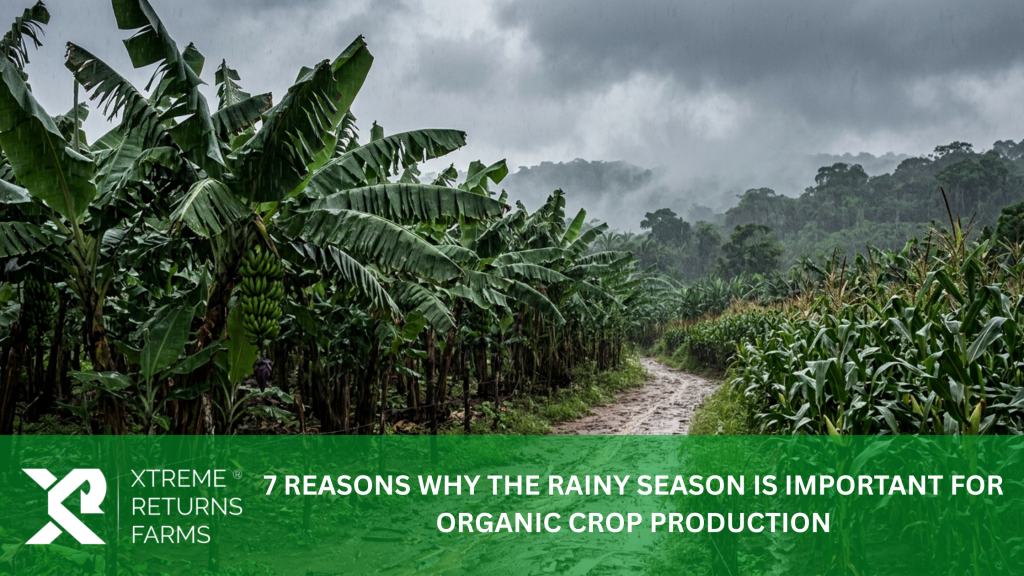
- Improved Soil Fertility and Nutrient: The rain helps improve soil fertility by increasing microbial activity in the soil. Beneficial microorganisms break down organic matter such as compost, crop residues, and animal manure into nutrients that crops can easily absorb. When rainfall penetrates the soil, it helps distribute nutrients evenly across farmland to all plantain, cassava and corn crops. Essential nutrients like nitrogen, phosphorus, and potassium move deeper into the root zone, making them accessible to crops.
- Easier Cultivation: Moist soil conditions during the rainy season also improve soil structure, making the soil easier to till and more welcoming to necessary microorganisms essential for the cultivation process. Organic matter decomposes more effectively under moist conditions, contributing to long-term soil enrichment and better crop yields.
- Higher Yields: The rainy season creates favorable conditions for rapid crop growth. Adequate moisture allows plants to perform photosynthesis efficiently, resulting in stronger stems, greener leaves, and healthier fruits and tubers. For organic farmers cultivating crops such as cassava, corn, and plantain, the rainy season often leads to higher yields and better-quality produce. Crops experience less stress because they receive consistent moisture, reducing the likelihood of stunted growth or poor harvests.
- Supports for Biodiversity and Eco Balance: Biodiversity is a critical component of organic farming. Pollinators such as bees and butterflies become more active when vegetation flourishes during the rainy season. Birds and beneficial insects also help control harmful pests naturally, reducing the need for chemical pesticides. Healthy biodiversity contributes to sustainable crop production because it creates a stable farming environment where crops can thrive naturally. This makes farms like ours more resilient to climate challenges and pest outbreaks.
- Cost Savings and Financial Gains: The rainy season can significantly reduce production costs for organic farmers. With natural rainfall available, farmers spend less on irrigation fuel, water supply systems, and energy consumption. Higher crop yields during the rainy season also increase profitability. In addition, successful rainy season farming contributes to food security by increasing the availability of fresh produce in local and international markets.
- Climate Friendly: Organic farming and the rainy season work together to support climate sustainability. Rainfall supports natural crop growth and ecosystem health. Sustainable farming practices such as composting, organic fertilization, agroforestry, and rainwater harvesting help conserve natural resources and reduce environmental degradation.
CONCLUSION
Xtreme Returns Farms is building a resilient and future-ready agricultural system. As climate change continues to affect global agriculture, we have adopted resilient farming systems that work in harmony with natural weather patterns. Through proper land management practices, e are maximizing the benefits of the rainy season while reducing environmental impact and improving food security. We remain committed to delivering high-quality, sustainable corn, cassava, and plantains; grown responsibly, harvested efficiently, and produced with the future in mind. Our goal is growing crops responsibly, sustainably, and in harmony with nature for tables across the world.
Contact us today for fresh and organic maize, cassava and plantains produce for retail and wholesale us. Call 09030001295 to order now.